









Take Your First Step
Tell us what you need help with and our team will contact you about the next step.

Is External Wall Insulation right for your home?
Published on 23 April 2026 : Updated 25 August • 5 minute read
Understanding whether External Wall Insulation suits your home
Many homeowners know their home feels cold, draughty or expensive to heat, especially in older properties. Even with attic or internal insulation in place, heat can still escape through external walls.
External Wall Insulation is often considered when wall heat loss is a major issue, but it is not suitable for every home. Understanding when it works best is key before making any decisions.
What is External Wall Insulation?
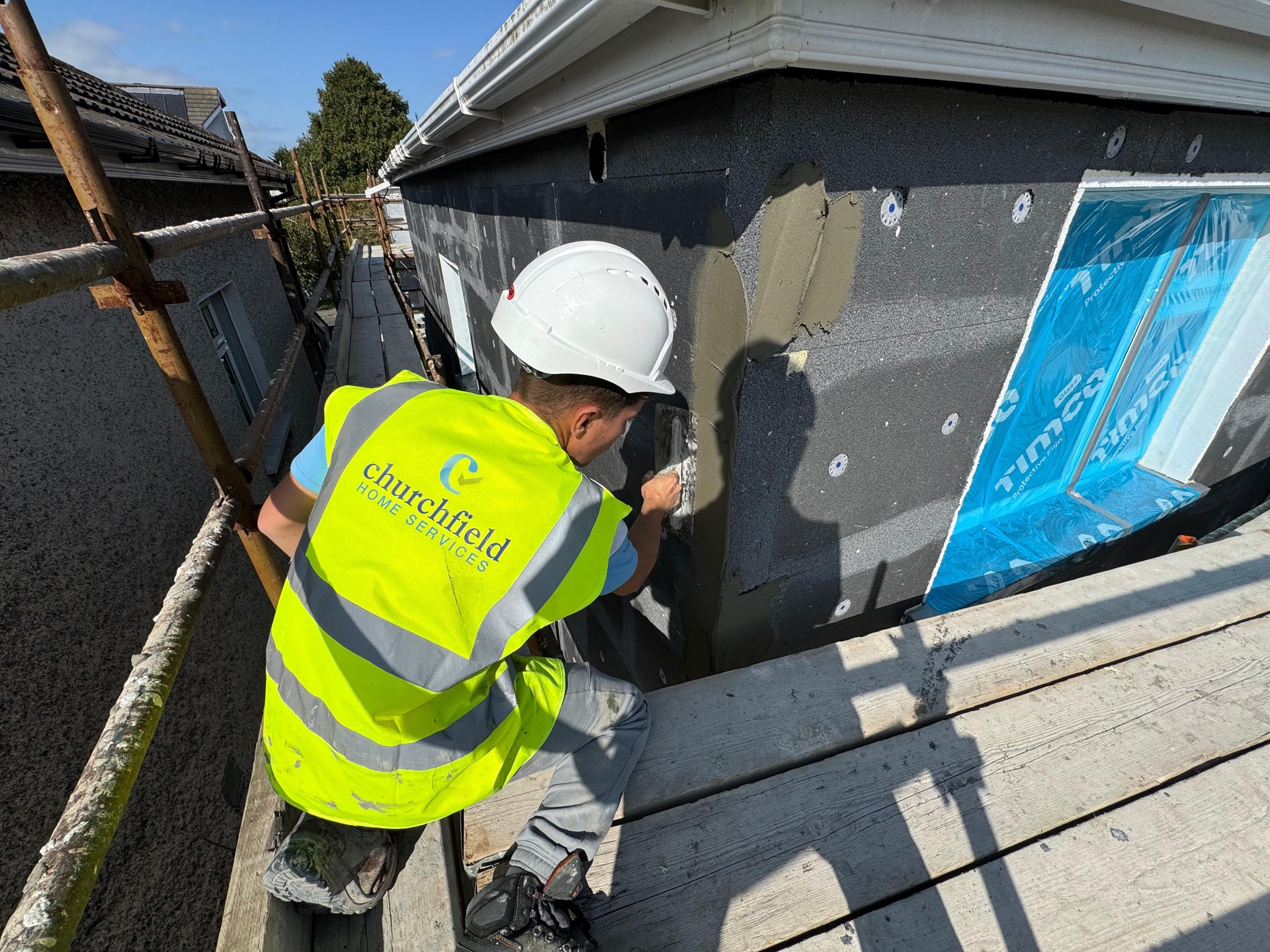
External Wall Insulation involves adding a layer of insulation to the outside of a building, finished with a protective render system.
This insulation wraps the home externally, reducing heat loss through walls while also shielding the structure from weather exposure. It improves thermal performance without reducing internal living space.

How External Wall Insulation improves comfort and efficiency
External Wall Insulation helps create a more stable indoor temperature by reducing cold wall surfaces and limiting heat escaping through the building fabric.
Homes with solid or poorly insulated cavity walls often feel warmer and more comfortable after installation. Heating systems can operate more efficiently because less energy is lost through the walls.
Over time, this can lead to lower energy usage and improved overall comfort rather than just short term warmth.
Health and building benefits beyond warmth
Beyond comfort and energy savings, External Wall Insulation can improve how a home performs from a health and building perspective.
By keeping internal wall surfaces warmer, it can reduce the likelihood of condensation and mold forming. This can be particularly beneficial for indoor air quality and long term building health.
The external render system also helps protect walls from weathering, which can extend the lifespan of the building fabric.
When External Wall Insulation is most suitable
External Wall Insulation is often well suited to:
- Homes with solid walls or poor cavity insulation
- Older properties where heat loss through walls is significant
- Homes undergoing wider energy upgrades
It is especially effective when planned as part of a wider home energy upgrade rather than as a standalone decision.
When External Wall Insulation may not be the right first step
In some homes, other measures may need to come first.
If attic insulation is poor, ventilation issues exist or heating systems are inefficient, these may need to be addressed before External Wall Insulation is considered. Planning upgrades in the correct order helps ensure the best results.
This is where understanding your home’s overall performance becomes important.




How to decide if External Wall Insulation is right for your home
The best way to decide is to understand how your home currently performs.
A Home Energy Assessment can identify where heat is being lost, how walls are contributing to that loss and whether External Wall Insulation is the most appropriate solution or part of a wider upgrade plan.
This avoids guesswork and helps ensure that any investment delivers real comfort and long term value.
What happens next?
External Wall Insulation is a significant improvement and should be planned carefully. For some homes, External Wall Insulation is the right move. For others, another upgrade may need to come first. That is why a Home Energy Assessment is the most reliable place to begin. It helps you understand what your home needs now, what could improve comfort most and how to move forward with more confidence. so what are you waiting for?!
👉 Book your Home Energy Assessment Today with Churchfield Home Services

Enjoy Year-Round Comfort with a Heat Pump
Is my home is Heatpump ready?Tags
- External Wall Insulation
- Churchfield Home Services
- Deep Retrofit Project
- Mayo
- Dublin
- External Wall Insulation Design
- Render finishes
Author

Published on 23 April 2026: Updated 25 August • 5 minute read
Share with

Our Trending Blogs
External Wall Insulation Cost Breakdown for Irish Homes
External Wall Insulation costs in Ireland vary from home to home. This guide breaks down what makes up the cost, how grants reduce the final price, and how Churchfield Home Services uses a Home Energy Assessment to give you clear, accurate figures before any work begins.
23 Apr : Updated 25 Aug • 5 min read
.png&w=1920&q=100)
Can You Get Up to €12,500 in Grants for a Heat Pump?
Yes — it is possible to receive up to €12,500 in SEAI grant support for a heat pump in Ireland, but only when it is installed through the One Stop Shop following a Home Energy Assessment. This blog explains how the €12,500 figure works, who it applies to, and how Churchfield Home Services manages the process from start to finish.
23 Apr : Updated 23 Apr • 4 min read
What Happens After Your Home Energy Assessment?
Once your Home Energy Assessment is complete, you might wonder what happens next. This guide explains the process clearly — what you receive, how grants are explained, and how you decide your next steps, with no pressure and in your own time.
09 Apr : Updated 09 Apr • 4 min read

Which Home Energy Grants Require an Assessment?
Not all home energy grants work the same way. Some require a full Home Energy Assessment before you can access funding, while others can be applied for individually. Understanding the difference helps you choose the right path for your home, your budget and your upgrade goals.
09 Apr : Updated 09 Apr • 5 min read

Common SEAI Grant Mistakes Homeowners Make
SEAI grants can take thousands off the cost of upgrading your home, but only if the process is handled correctly. Many homeowners do not miss out because they are ineligible. They miss out because of avoidable mistakes in how they apply, plan or sequence the work.
09 Apr : Updated 09 Apr • 4 min read

How SEAI Grants Are Applied and Deducted Upfront
If you are planning a home energy upgrade, one of the biggest questions is how SEAI grants are actually applied. Do you pay the full amount first? Or are grants deducted before you pay? Here is how the process works — and how Churchfield Home Services manages it for you.
27 Mar : Updated 27 Mar • 6 min read

Start saving on your energy bills today!
Sign up to our weekly newsletter
- Learn how to access grants and funding
- Tips and offers to reduce your energy bill


