








Take Your First Step
Tell us what you need help with and our team will contact you about the next step.

Common SEAI Grant Mistakes Homeowners Make
Published on 09 April 2026 : Updated 09 April • 4 minute read
Common SEAI Grant Mistakes Homeowners Make and How to Avoid Them
SEAI's current homeowner grants cover individual energy upgrades, One Stop Shop upgrades and fully funded upgrades for eligible households, with support now including higher grant rates in 2026 and new windows and doors grants.
If you are trying to improve comfort, lower bills and make the most of the grant support available, the real goal is not just getting approved. It is making sure the right work happens in the right order, under the right scheme, with the right paperwork in place. That is where most grant mistakes happen.
What are SEAI grants?
The Sustainable Energy Authority of Ireland administers a range of government-funded supports to help homeowners improve energy efficiency, comfort and running costs. Depending on your home and the route you choose, grants may be available for attic insulation, wall insulation, heat pumps, heating controls, solar PV, solar water heating, windows and doors and full coordinated upgrades through a registered One Stop Shop. SEAI currently presents three homeowner routes: individual energy upgrades, One Stop Shop and fully funded upgrades for eligible homes.
Some of the headline supports available in 2026 include:
✔ Up to €8,000 for external wall insulation
✔ Up to €12,500 in combined heat pump-related supports where applicable
✔ Up to €2,000 for attic insulation depending on house type
✔ Up to €1,800 for solar PV
✔ New windows and doors grants from 2 March 2026 under the individual grants route
✔ Substantial whole-home support through the One Stop Shop route for upgrades targeting at least a B2 BER.
These are generous supports. But they come with rules, technical requirements and process requirements. That is why getting the grant is not just about deciding what you want installed. It is about making sure your home, your route and your timing all line up properly.
Why Grant mistakes happen?
Most homeowners do not deal with SEAI grants every day. They are trying to make practical decisions about warmth, cost and disruption while navigating scheme names, contractor lists, technical conditions and deadlines. On top of that, many measures affect each other. A heat pump, for example, is not just a heat pump decision. It is also a heat-loss, insulation and system-readiness decision. SEAI’s own guidance reflects that joined-up approach, especially under the One Stop Shop pathway.
The good news is that most of the common mistakes are preventable. Below are the ones homeowners most often make, what goes wrong and what to do instead.
Mistake 1: Starting work before grant approval is confirmed
This is one of the most costly mistakes. For grant-supported works, approval needs to be in place before installation begins under the relevant route. If work starts too early, the grant may not be payable even if the measure itself would otherwise have qualified. SEAI’s individual grants support pages direct homeowners to choose a registered contractor and apply through the grant system, with payment only after the works are completed and the correct forms are submitted.
Why it happens: homeowners are eager to get going, a contractor has availability, or the approval timeline is misunderstood.
What goes wrong: work starts, money is spent and the homeowner later discovers the claim cannot proceed properly.
What to do instead: wait until grant approval is confirmed and make sure the contractor understands the job is being done under the relevant SEAI route.
Mistake 2: Choosing the wrong grant route for your home
A lot of homeowners make the mistake of comparing individual grants and One Stop Shop only on headline grant values. That is too narrow. The right route depends on how many measures you are planning, whether you want to phase work over time and how much project management you want to do yourself. SEAI distinguishes between individual energy upgrades and One Stop Shop upgrades, with One Stop Shop intended for more substantial coordinated works targeting at least a B2 BER.
Why it happens: the scheme names sound administrative rather than practical, so people focus on grant amounts instead of route suitability.
What goes wrong: a homeowner may apply for individual measures when a coordinated plan would have suited better, or assume they need a full retrofit when a phased route would be more realistic.
What to do instead: decide first whether you are doing one or two targeted upgrades or building toward a broader retrofit plan. A Home Energy Assessment helps make that decision much clearer.
Mistake 3: Upgrading in the wrong order
The sequence of work matters more than many people realise. A common example is moving to a heat pump before improving insulation or checking whether the home is ready from a heat-loss perspective. Heat pumps can attract strong support, but SEAI’s rules and guidance still reflect the importance of the wider home fabric and system readiness.
Why it happens: homeowners naturally focus on the upgrade that feels most transformative or has the most attractive grant.
What goes wrong: performance can disappoint, running costs may not improve as expected and the home may still feel less comfortable than it should.
What to do instead: follow a planned pathway. In many homes that means improving insulation first, addressing ventilation where needed and then upgrading the heating system.
A simple example: A homeowner may be drawn to the heat pump grant because it looks like the biggest support available. But if the home still has major heat loss through walls or attic, that system may end up working harder than it should. The result is a more expensive project with a weaker outcome than if the insulation had been tackled first
Mistake 4: Assuming every home qualifies for the same level of support
Two homes on the same street can qualify very differently. House type, wall construction, existing insulation, BER position and previous grant history can all affect what is available. SEAI’s grant pages show different support levels by house type for measures such as attic insulation, wall insulation and windows.
Why it happens: people compare their home to a neighbour’s, rely on old information or assume all houses of a similar age qualify in the same way.
What goes wrong: expectations are set too high or the wrong measures are budgeted for.
What to do instead: treat your home as its own case. The safest starting point is a home-specific assessment rather than a general assumption.
Mistake 5: Using a contractor who is not registered with SEAI
For grant-backed work, registration matters. SEAI’s individual grants support tells homeowners to use an SEAI registered contractor, and the One Stop Shop route must be handled through a registered One Stop Shop provider.
Why it happens: a homeowner already knows a local installer, gets a cheaper quote elsewhere or assumes previous grant work means the contractor is still registered.
What goes wrong: the grant can be jeopardised because the contractor is not on the relevant current scheme list.
What to do instead: check registration before committing, and check that the contractor is registered for the specific measure being installed. Do not assume it is still current just because they were registered before.
Mistake 6: Underestimating the documentation requirements
Grant payment is not automatic once the job is finished. SEAI requires the correct submission process, declarations and post-works evidence depending on the route and measure. For individual grants, payment follows completed works and correctly submitted request-for-payment documents. SEAI’s homeowner application guide also states that a post-works BER is required in relevant cases and that BER funding is available once per home.
Why it happens: homeowners focus on the installation itself and assume the grant is the easy part.
What goes wrong: payment is delayed or complications arise because forms, certificates or supporting evidence are missing or incomplete.
What to do instead: know the document trail before work begins. If you are managing an individual grant yourself, ask for a checklist in advance. If you are using a One Stop Shop, make sure documentation handling is clearly part of the service.
Mistake 7: Focusing only on the grant amount, not the outcome
This is one of the most overlooked mistakes. A large grant can make a measure look like the obvious next step, but the best-supported measure is not always the best first measure for your home.
Why it happens: grant values are easy to compare while comfort, heat retention and upgrade sequencing are harder to visualise.
What goes wrong: a homeowner chooses a measure mainly because it is subsidised rather than because it solves the home’s biggest problem.
What to do instead: think in terms of outcome first. The real aim is a warmer, healthier, better-performing home with lower running costs. The grant should support that decision, not replace it.
Mistake 8: Not checking whether the property has previously claimed
SEAI states that homeowners who have previously availed of certain wall insulation grants can now apply for a second wall insulation measure, which shows how important previous grant history is in determining what can still be claimed. Previous support tied to the property can affect eligibility for later claims.
Why it happens: the current owner may not know what a previous owner claimed, especially if the property changed hands years ago.
What goes wrong: the homeowner plans around a grant that is no longer available for that measure at that address.
What to do instead: check previous grant history as early as possible and make sure the assessment reflects any existing measures already installed.
Mistake 9: Treating estimates and quotes as the same thing
A good assessment gives useful cost direction, but it is still not the same as a final quoted scope. Different providers may price different product standards, installation details and supporting works.
Why it happens: once a homeowner sees a number in writing, it is natural to treat it as a fixed figure.
What goes wrong: people compare unlike-for-like proposals or assume the cheapest figure means the best value.
What to do instead: when comparing options, ask exactly what is included, which measures are assumed and whether related works such as ventilation, making-good or heating distribution changes are part of the quote.
How to protect your grant eligibility from the start
The best way to reduce mistakes is to start with a proper Home Energy Assessment and a clear route. SEAI supports Home Energy Assessments under the individual grants route and positions them as part of planning a structured upgrade pathway. Where relevant, the assessment helps identify what your home needs first, which grants may apply and how the works should be sequenced.
From there, the safest process is straightforward:
✔ assess the home properly
✔ choose the right grant route
✔ confirm eligibility and technical requirements
✔ wait for approval before works begin
✔ use the correct registered contractor or provider
✔ keep the documentation process tight from start to finish
That is the point where the process stops feeling confusing and starts feeling manageable.
Frequently asked questions
Can I apply for SEAI grants myself?
Yes, for individual energy upgrades homeowners can apply through SEAI’s online application process. One Stop Shop upgrades are managed through a registered One Stop Shop provider.
What happens if work starts before grant approval?
That can put the grant at risk. Approval should be in place before grant-backed works begin.
Can I claim a grant for windows and doors in 2026?
Yes. SEAI’s windows and doors grant is now open, with eligibility tied to conditions including home age, insulation readiness, use of registered contractors and other scheme requirements.
Do I need a BER certificate?
A BER requirement depends on the route and measure. SEAI’s homeowner application guide confirms a post-works BER is required in relevant cases and BER grant support is available once per home.
Can the same home claim wall insulation support twice?
There is now a 2026 change allowing homeowners who previously availed of cavity or internal wall insulation support to apply for a second wall insulation measure, subject to scheme rules.
Get the right grant plan for your home
SEAI grants can save you thousands, but only when the process is handled properly. Starting with the right assessment helps you avoid delays, protect your eligibility and make better upgrade decisions from the beginning.
With Churchfield Home Services, you can get clear guidance on which grants apply, what order the work should happen in and which route fits your home best.
👉 Book your Home Energy Assessment today
Take the guesswork out of grants and start with a clear pathway towards a warmer, more efficient home.

Enjoy Year-Round Comfort with a Heat Pump
Is my home is Heatpump ready?Tags
- Home Energy Assessment
- Home Energy Assessment Calculator
- Grant Oil Boiler
- SEAI Grants
- One Stop Shop Grants
- Individual Energy Upgrades Grants
- IEU Grants
Author

Published on 09 April 2026: Updated 09 April • 4 minute read
Share with

Our Trending Blogs
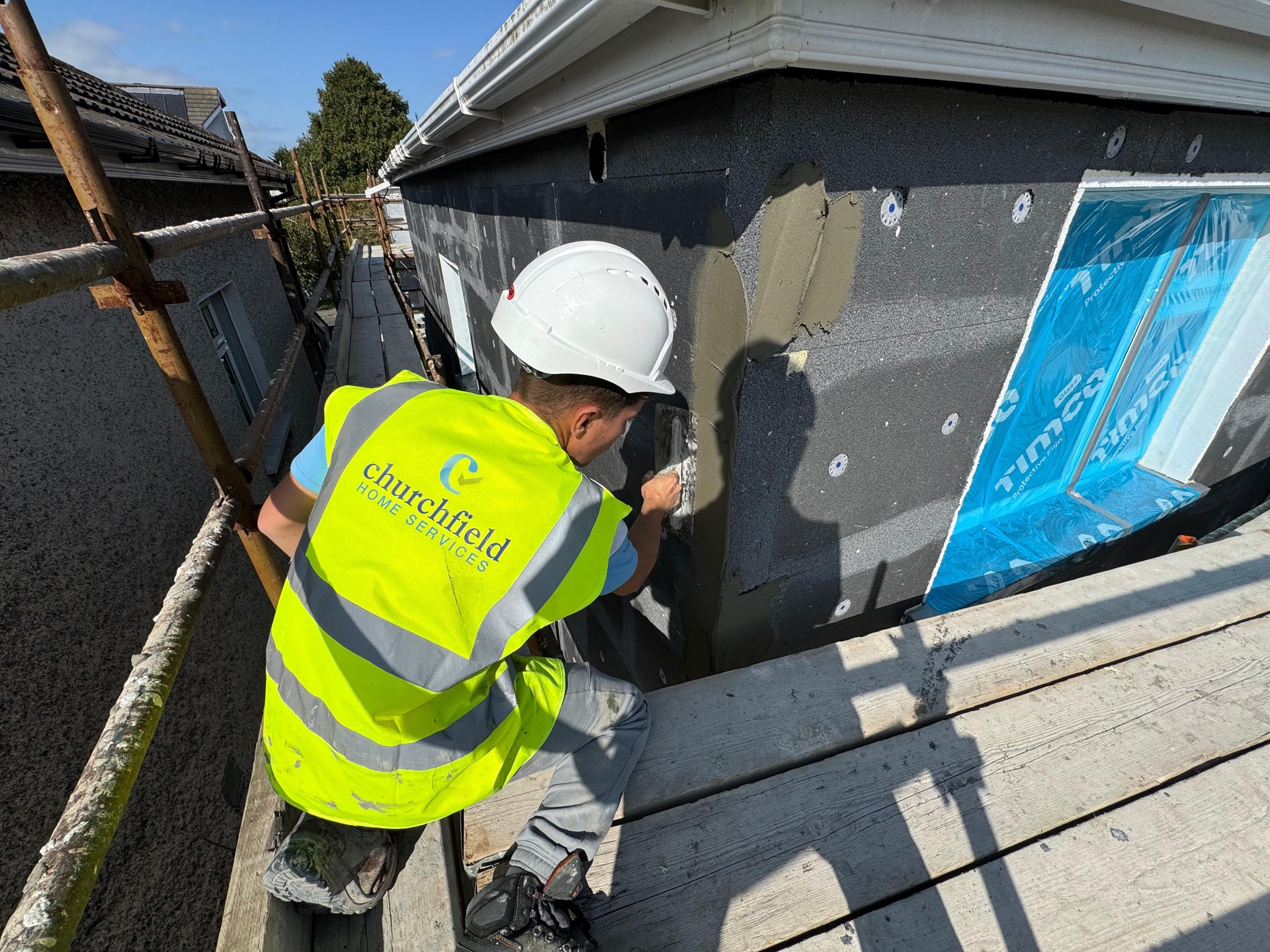
External Wall Insulation Cost Breakdown for Irish Homes
External Wall Insulation costs in Ireland vary from home to home. This guide breaks down what makes up the cost, how grants reduce the final price, and how Churchfield Home Services uses a Home Energy Assessment to give you clear, accurate figures before any work begins.
23 Apr : Updated 25 Aug • 5 min read
.png&w=1920&q=100)
Can You Get Up to €12,500 in Grants for a Heat Pump?
Yes — it is possible to receive up to €12,500 in SEAI grant support for a heat pump in Ireland, but only when it is installed through the One Stop Shop following a Home Energy Assessment. This blog explains how the €12,500 figure works, who it applies to, and how Churchfield Home Services manages the process from start to finish.
23 Apr : Updated 23 Apr • 4 min read

Is External Wall Insulation right for your home?
External Wall Insulation can improve comfort, reduce heat loss and protect your home’s structure. This guide explains what External Wall Insulation does, when it makes sense and how to decide if it is right for your home.
23 Apr : Updated 25 Aug • 5 min read

What Happens After Your Home Energy Assessment?
Once your Home Energy Assessment is complete, you might wonder what happens next. This guide explains the process clearly — what you receive, how grants are explained, and how you decide your next steps, with no pressure and in your own time.
09 Apr : Updated 09 Apr • 4 min read

Which Home Energy Grants Require an Assessment?
Not all home energy grants work the same way. Some require a full Home Energy Assessment before you can access funding, while others can be applied for individually. Understanding the difference helps you choose the right path for your home, your budget and your upgrade goals.
09 Apr : Updated 09 Apr • 5 min read

How SEAI Grants Are Applied and Deducted Upfront
If you are planning a home energy upgrade, one of the biggest questions is how SEAI grants are actually applied. Do you pay the full amount first? Or are grants deducted before you pay? Here is how the process works — and how Churchfield Home Services manages it for you.
27 Mar : Updated 27 Mar • 6 min read

Start saving on your energy bills today!
Sign up to our weekly newsletter
- Learn how to access grants and funding
- Tips and offers to reduce your energy bill


