







Take Your First Step
Tell us what you need help with and our team will contact you about the next step.
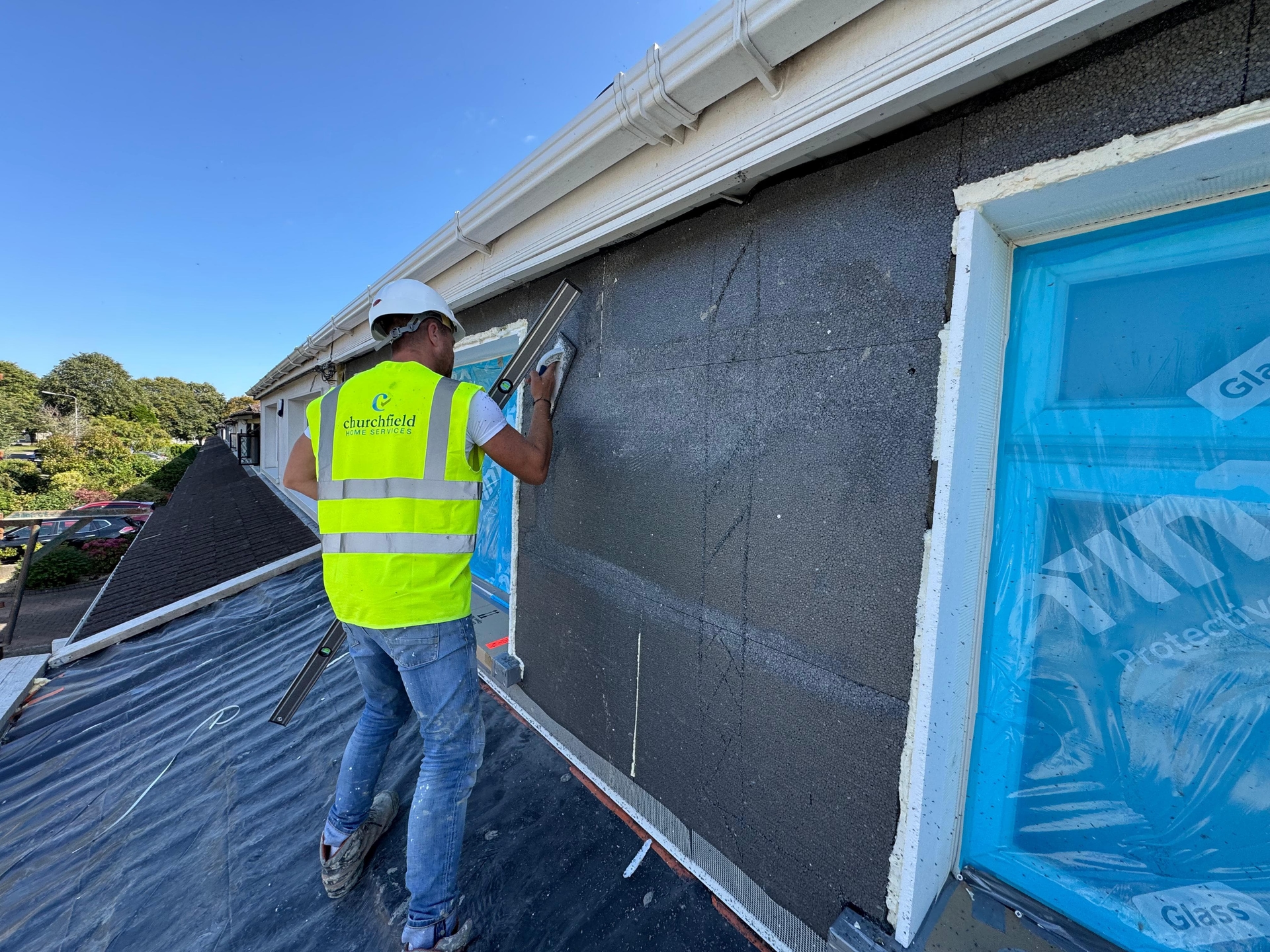
External Wall Insulation Grants in Ireland Explained for 2026
Published on 08 April 2026 : Updated 25 August • 3 minute read
What is External Wall Insulation?
External Wall Insulation (EWI) involves fixing insulation boards to the outside of your home and finishing them with a protective render. It is commonly used on older Irish homes with solid walls or poor thermal performance.
When installed as part of a planned upgrade, EWI can help reduce heat loss, improve comfort, and support a better BER once suitable upgrades are completed.
What External Wall Insulation Grants Are Available in 2026?
In 2026, grant support for External Wall Insulation is provided through the Sustainable Energy Authority of Ireland (SEAI).
External Wall Insulation is not a standalone grant. It is supported under the SEAI One Stop Shop Home Energy Upgrade pathway, where multiple upgrades are planned together following a Home Energy Assessment.
Grant support for EWI can be up to €8,000, depending on:
- Your home type
- The scope of works recommended
- Whether the upgrade forms part of a full Home Energy Upgrade
Grants are applied for and managed as part of the One Stop Shop process, not individually by homeowners.
Why External Wall Insulation Requires a Home Energy Assessment
Before any grant-supported External Wall Insulation can begin, a Home Energy Assessment (HEA) is required.
The assessment:
- Reviews how your home currently performs
- Identifies where heat is being lost
- Confirms whether External Wall Insulation is appropriate
- Places EWI correctly within a whole-home upgrade plan
This ensures upgrades are carried out in the right order and meet SEAI technical requirements.
Without an assessment, grant support is not available.
Which Homes Are Suitable for External Wall Insulation?
External Wall Insulation is most commonly recommended for:
- Detached homes
- Semi-detached homes
- Older properties with solid block or stone walls
It may also suit some end-of-terrace homes. Apartments and mid-terrace homes are less commonly suitable and require careful assessment.
Every home is different, which is why suitability is confirmed during the Home Energy Assessment rather than assumed upfront.



How the Grant Is Applied and Paid
Under the One Stop Shop model:
- The grant is applied for after your Home Energy Assessment
- SEAI approval is received before works begin
- The grant is deducted upfront from the cost of works
- You pay the net cost, not the full amount
This removes paperwork and uncertainty for homeowners.
What Happens Next?
If you are considering External Wall Insulation in 2026, the correct next step is always the same:
- Book a Home Energy Assessment
- Receive a clear upgrade plan for your home
- Confirm which grants apply
- Decide if and when you want to proceed
There is no obligation to upgrade after the assessment. The goal is clarity before decisions.
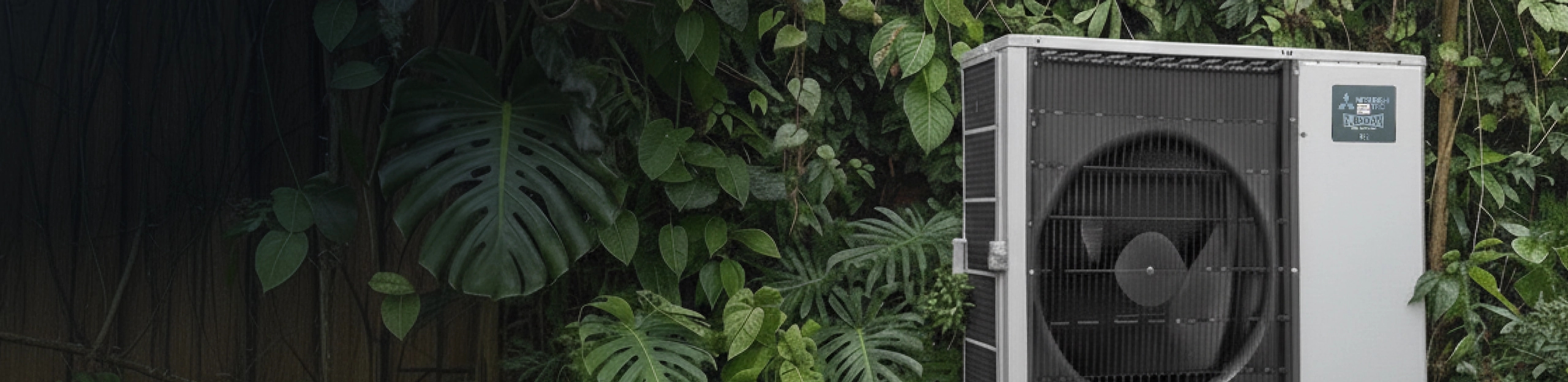
Enjoy Year-Round Comfort with a Heat Pump
Is my home is Heatpump ready?Tags
- External Wall Insulation
- Home Energy Assessment
- Home Energy Assessment Calculator
- External Wall Insulation Design
Author

Published on 08 April 2026: Updated 25 August • 3 minute read
Share with

Our Latest Blogs

Is External Wall Insulation right for your home?
External Wall Insulation can improve comfort, reduce heat loss and protect your home’s structure. This guide explains what External Wall Insulation does, when it makes sense and how to decide if it is right for your home.
23 Apr : Updated

How Much Does External Wall Insulation Cost in Ireland After Grants
The cost of External Wall Insulation in Ireland after grants depends on your home type, wall area, and whether the upgrade is carried out through the SEAI One Stop Shop. This guide explains how pricing works, how grants reduce costs, and why a Home Energy Assessment is needed before figures can be confirmed.
06 Feb : Updated
.png&w=1920&q=100)
External Wall Insulation Grant vs Other Insulation Grants
Short description (under 500 characters): External Wall Insulation grants work differently to other insulation supports in Ireland. This guide explains how EWI compares to attic, cavity, and internal wall insulation grants, and how Churchfield Home Services uses a Home Energy Assessment to confirm the right insulation approach and grant pathway for your home.
08 Apr : Updated

Start saving on your energy bills today!
Sign up to our weekly newsletter
- Learn how to access grants and funding
- Tips and offers to reduce your energy bill


