









Take Your First Step
Tell us what you need help with and our team will contact you about the next step.
A Comprehensive Guide to Home Energy Assessment in Ireland
Published on 08 April 2026 : Updated 08 April • 5 minute read
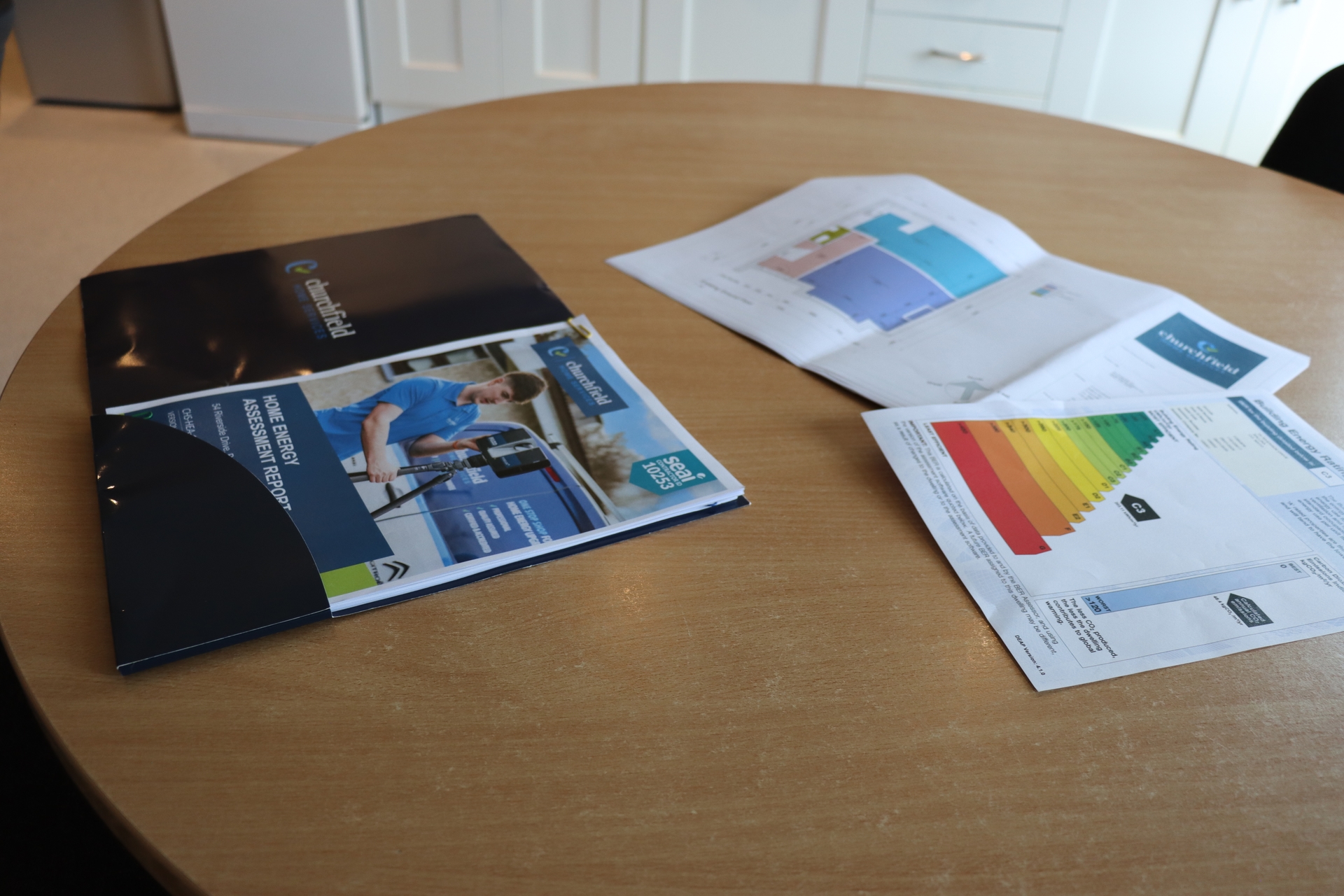
With your Home Energy Assessment completed, you now have a clear picture of where your home stands and what upgrades will make the biggest difference. The report doesn't just list recommendations—it prioritises them, so you know whether to start with insulation, a heat pump, or solar panels. This roadmap takes the guesswork out of your project and ensures every step you take moves you closer to a B2 rating or better. Because the HEA document is transferable, it empowers you to shop around and find the most competitive pricing across the OSS market.
Grant support for your HEA
If your home was built before 2011 and you have not claimed an HEA grant previously, SEAI offers grant support up to €350. This is applied as a deduction from the assessment cost. So you only pay the chosen One Stop Shop provider the net amount.
At Churchfield Home Services we explain how the Home Energy Assessment grant works at the start and what you will receive at the end of the assessment so you can plan with confidence.
Why Diligence and Clear Goals matter?
The HEA process is structured, but a structured process does not guarantee best value unless you stay involved. Homeowners who set clear goals, share priorities early and ask the right questions typically achieve better outcomes and stronger value for money. For that there are three areas deserve your attention:
✔ The B2 pathway
✔ The cost estimate
✔ Transferability
Churchfield helps you understand these early so you can make better decisions and avoid unnecessary costs later.
Understanding the B2 pathway
There are multiple ways to reach a B2 or better BER rating. Your HEA usually presents one recommended pathway and shows progress step by step. So you can see how the BER changes with each measure. It is also useful to know that One Stop Shop supports depend on more than reaching B2. A minimum BER uplift of 100 kWh/m²/year is also required. How that looks can vary based on your home's conditions.
Because there can be different routes to the same destination, it is worth considering which option makes the most sense financially and in payback terms. For example, if your boiler was replaced recently, it may be better to prioritise other measures. If your heating system is old and inefficient, a heat pump can be a higher priority than adding solar PV. A sensible approach is to treat measures and costs beyond the B2 target and uplift requirement as optional so you are not forced into overspending to aim higher than you need to at the start.
Watch this video below to get a clear idea of the whole process:
Set your Homeowner Goals before the Survey
You can influence the pathway by being clear with your assessor about what matters most to you. In the HEA, these priorities are recorded as your homeowner goals and can reflect your preferences and budget range.
You may want to replace windows, or keep them if possible. You might want solar PV included, or prefer advanced ventilation. Not every preference can be met in every home for technical reasons, but your goals should still play a meaningful role in shaping the pathway. That is why it is best to discuss priorities before the survey takes place. At Churchfield, we begin with a consultation so your survey and report are aligned with your goals.
👉 Book an assessment and get a clear upgrade roadmap for your home.
Cost estimate vs Quote
Alongside the pathway, your HEA should include a cost estimate. It is important to separate an estimate from a full quote. Some providers include detailed quotations, but many use estimates at the HEA stage. A quote is normally based on final design and specification, with the provider standing over the price for a defined period. An estimate can change once specifications are confirmed, including choices such as window and door types. This is often where confusion happens because different providers move from estimate to final quotation in different ways. Churchfield will explain the assumptions behind the estimate so you understand what could change and why.
👉 Request a quote and we will explain what is included and what you will receive.
The importance of Transferability
HEAs are transferable because the report format is standard, making it possible to compare providers. In practice, there are a few things a homeowner needs to keep in mind. First, A Home Energy Assessment is a signpost document rather than a final engineering design, which often requires further work. When comparing providers, you are usually comparing estimates rather than fully designed, fixed quotes. It is also important to remember that proposals may not be directly comparable. Heat pump and ventilation brands differ greatly, and the same goes for windows and doors. Since the HEA does not rate product quality or reputation, it’s important to do your own research, ask questions, and seek referrals.

Quality of the HEA and your Retrofit journey
The HEA and its grant support replaced a more basic BER-only starting point and has improved the retrofit journey for many homeowners. The value of your HEA depends on both technical expertise and communication. A strong assessor listens, reflects your priorities in homeowner goals and explains the pathway clearly when the report is complete. If one pathway is not viable or affordable, there may be alternatives that your assessor or One Stop Shop can explore.
Choosing the right One Stop Shop provider
Most homeowners continue with the One Stop Shop provider who arranged their HEA. That is why your first choice matters. Price is one factor, but the bigger factor is the service you receive, the clarity of the guidance and the support you get throughout the process.
Churchfield Home Services Approach
At Churchfield Home Services, HEA estimates are generally subject to a small number of final confirmations, such as checking pipework suitability where relevant and confirming window or door choices if they form part of the pathway. If you already have an HEA, we can review it and advise on next steps. In many cases, we recommend a technical visit to validate key assumptions before progressing to a final quotation. Where appropriate, we may also suggest an alternative pathway if it offers better value or better sequencing for your home and budget.
Book your Home Energy Assessment with Churchfield
Now that you know the basics, the first step is simple. Fill out our enquiry form and request a free consultation with one of our Retrofit Advisors. We will confirm your goals, explain the assessment process and help you understand the best next step for your home.
👉 Book your Home Energy Assessment and get a clear upgrade roadmap.

Enjoy Year-Round Comfort with a Heat Pump
Is my home is Heatpump ready?Tags
- One Stop Shop
- Retrofit One Stop Shop
- Home Energy Assessment
- Home Energy Assessment Calculator
- SEAI Grants
- One Stop Shop Grants
- Individual Energy Upgrades Grants
- IEU Grants
- SEAI Grants
- Home Energy Upgrade Grants
Author

Published on 08 April 2026: Updated 08 April • 5 minute read
Share with

Our Latest Blogs

What Is a Home Energy Assessment — and Why Does It Matter for Your Home?
If you are thinking about improving your home but are unsure where to start, a Home Energy Assessment gives you a clear picture of how your home performs today so future decisions are informed and unpressured.
08 Apr : Updated

A Home Energy Assessment Explained for Irish Homeowners
A Home Energy Assessment helps Irish homeowners understand how their home is performing today. It explains where heat is being lost, why comfort issues exist and what improvements may be worth considering before any decisions are made.
08 Apr : Updated

How much does a Home Energy Assessment cost in your area?
Most people asking about the cost of a Home Energy Assessment want reassurance, not just a price. This guide explains what affects the cost, what does not and how to decide if a Home Energy Assessment is the right first step for your home.
08 Apr : Updated

Start saving on your energy bills today!
Sign up to our weekly newsletter
- Learn how to access grants and funding
- Tips and offers to reduce your energy bill


